

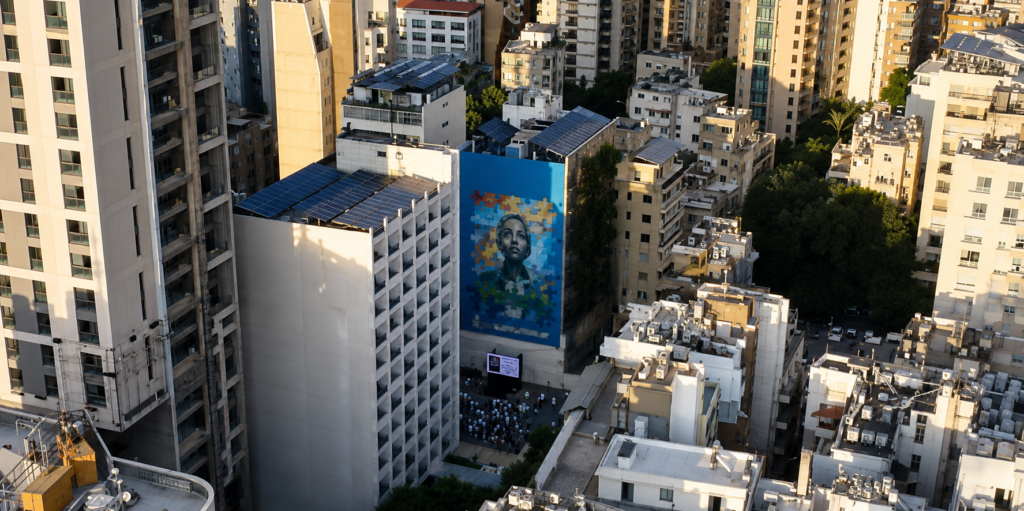
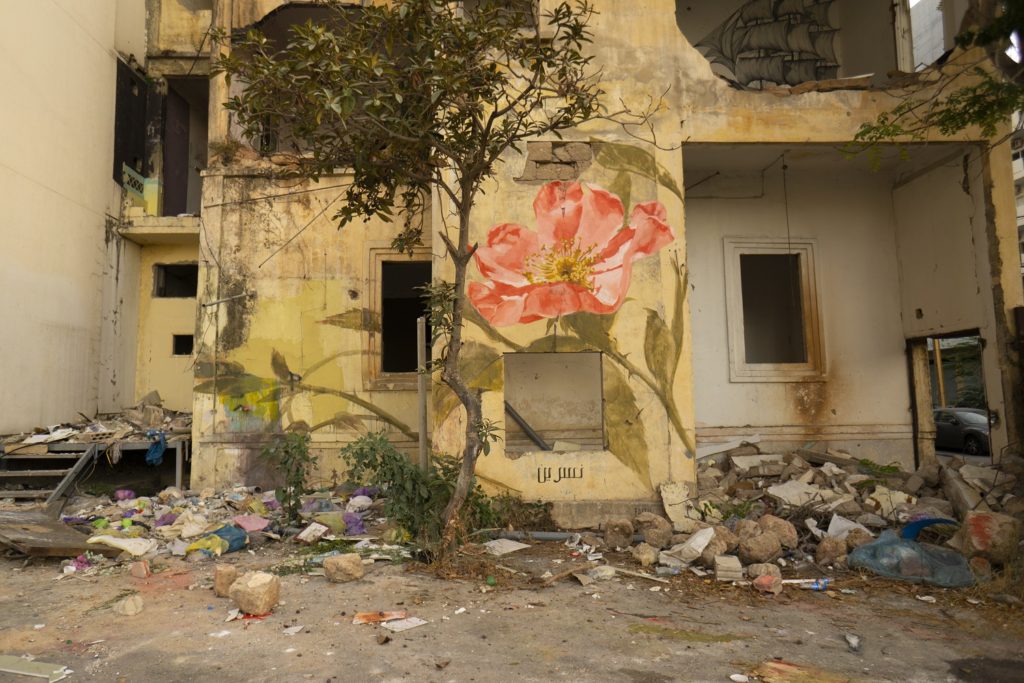
In the heart of Geitawi, Beirut, a new large-scale mural by Lebanese artist SPAZUNO brings a striking image of light, life, and resilience to a building with a history shaped by conflict. Titled Carriers of the Sun, the work places the Palestinian sunbird at its center, transforming a familiar symbol in the artist’s recent practice into a reflection on land, belonging, displacement, and the enduring connection people carry with them, wherever life takes them.
 For SPAZUNO, the sunbird represents more than a place of origin. It embodies the idea that even when people are separated from their land, forced to leave their homes, or scattered across the world, their connection to where they come from does not disappear. Instead, it travels with them, carried through memory, identity, and the light of the places they call home. As the artist puts it, “We carry the light of our land to illuminate every corner of the world.”
The mural’s meaning, however, extended beyond the artist’s original intentions following an unexpected encounter with a resident of the building. After the work was completed, she approached SPAZUNO and shared stories about the building’s past, revealing a history he had not known while developing the piece.
During the Lebanese Civil War, the building had survived repeated RPG strikes targeting its rooftop. The resident also recalled an incident in which a car loaded with fuel was struck and set ablaze directly in front of the building, during a period marked by fuel scarcity. These memories revealed a place that had endured not only physical destruction but also the uncertainty and hardship of life during wartime.

Learning this history brought an unexpected dimension to Carriers of the Sun. A building that had once witnessed violence and survival now carried an image associated with life, color, and light. For the artist, this discovery shifted his understanding of the mural, connecting its themes of resilience and belonging to the very walls on which it was painted.
 Rather than covering over the building’s past or offering an attempt to erase its painful memories, the mural introduces something new into its history. It allows the site to hold two seemingly contrasting realities: the memory of conflict and the possibility of renewal. Its presence does not change what happened, but it changes what the building can represent today.
This relationship between art and memory lies at the heart of the project. In public spaces, murals become part of the environments people inhabit, adding new layers of meaning to places that already carry personal and collective histories. They can create moments of reflection, offer alternative narratives, and remind communities of the possibility of life beyond the experiences that have shaped them.
With Carriers of the Sun, SPAZUNO explores this possibility through the image of a bird that carries the light of its land wherever it goes. In a city whose landscape and collective memory remain deeply marked by conflict, the mural becomes a quiet yet powerful statement about endurance, identity, and the persistence of hope.
Ultimately, Carriers of the Sun is not simply an artwork about displacement or the longing for home. It is also about the capacity of places and people to hold more than one story. In Geitawi, a building once marked by memories of war now carries a new image of resilience and life. Its history remains, but so does the possibility of light after darkness.




No Comment